
From time to time, a familiar concern resurfaces within our life as a Uniting Church, not from outside critics, but from people deeply shaped by this church. It is often spoken with care and concern: Have we become too focused on social justice? Too concerned with inclusivity, diversity, and unity? We need to sharpen our focus on the Gospel.
I do not hear this as negative or argumentative, but as an opportunity for discernment. Beneath it, I hear a longing for faithfulness, for reassurance that Jesus Christ truly remains at the centre of all we do. That longing matters. It invites listening rather than defensiveness.
Still, I find myself lingering with the language of sharpening. What do we hope will come into clearer focus? And what do we fear might be slipping out of view?
These questions for me are shaped not only by my formation in the Uniting Church, but also by my Tongan heritage. In the Pacific, boats are not symbols of leisure; they are vessels of trust and survival. To step into a boat is to accept vulnerability, to rely on one another and to read the winds and currents carefully. Journeying is communal, and faith is lived on the move.
The Uniting Church often describes itself as a Pilgrim people. That image resonates deeply with me. A pilgrim church does not remain safely anchored. It sets out, trusting that the Spirit leads, even when the weather shifts and the horizon feels uncertain. Pilgrims travel not because everything is resolved, but because God is faithful enough to meet them on the way.
I remember wrestling with this during my training for ministry, particularly when reading ‘Where Did the Joy Come From?’ by one of our former presidents, Andrew Dutney. What stayed with me then, and still does, is his insistence that joy in the life of the Church does not come from ease or agreement. It comes from costly faithfulness: from staying in the boat together and continuing the journey, even when discipleship stretches us.
The Gospel itself is not distant or abstract. In Jesus, God chooses nearness. The Word becomes flesh and enters fully into the unpredictability of human life, its beauty, pain and division. The Gospel does not draw us away from the world; it sharpens our attention to where love is most needed.
If the Gospel is truly the Word made flesh, then justice, inclusion, and unity are not distractions from faithfulness, but places where faithfulness is learned, tested and embodied.
From this place, commitments to inclusivity, diversity, and unity feel less like distractions and more like practices of learning how to travel together. Justice unsettles us not because it is foreign to the Gospel, but because love is costly.
Sharpening our focus on the Gospel does not make the journey easier. It makes it truer.
We do not always navigate well. We disagree, misread the conditions, and fall out of rhythm with one another. Yet we keep returning to Jesus Christ, crucified and risen. The cross assures us that God enters suffering fully; the resurrection promises that love has the final word.
Perhaps the deeper question is not whether we need to sharpen our focus on the Gospel, but whether we are willing to let the Gospel keep sharpening us. As Pilgrims of the Spirit, the Uniting Church is not called to cling to the shore, but to trust the One who still calls us forward.

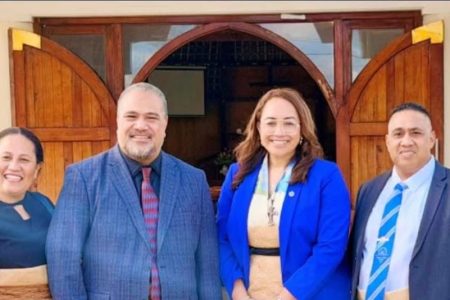
Rev Salesi Faupula
Moderator, Synod of Victoria and Tasmania