
By Marina Williams
When Dr Heejeong ‘Silvia’ Yang was commissioned as a lay preacher at the Korean Church of Melbourne in August, she knelt surrounded by ministers and mentors who had supported her through almost two decades of theological formation and church service. Members of her eight-women cell group watched in tears.
The moment was significant not only for Silvia. For many in the congregation, the service also introduced the Uniting Church role of lay preacher – a ministry unfamiliar in Korean church tradition.
“This commissioning is not an ending but a beginning,” Silvia says. “My journey from teaching to preaching has only just begun.”
For Silvia, the milestone connects directly with questions she was asking a decade ago about the place of women in Korean churches.
In 2016, she told Crosslight that Korean women were highly active in congregational life but could have limited opportunities in areas such as preaching. She says women remain central to church life, but that contribution does not always translate into leadership or decision-making.
“Many women of my generation were taught that faithfulness meant being obedient, serving quietly and supporting others rather than speaking publicly or exercising leadership,” Silvia says.
“My hope is that future generations will see leadership not through the lens of gender, but through the lens of calling and gifts.”
Silvia’s own call to preaching took years to emerge.
She began a Master of Divinity at Whitley College in 2007, studying one subject a semester and completing the degree in 2014.
That year she received a scholarship to attend a women’s leadership program at the Ecumenical Institute at Château de Bossey in Switzerland. On the final day, 33 women from around the world shared their stories and hopes.
Silvia recalls saying at the time that her life in Australia would move “from teaching to preaching”.
The words stayed with her, but preaching did not immediately follow. Instead, she became more involved in Synod committees and multicultural church life while continuing her career in education.
Then, while walking the final stages of the Camino de Santiago in 2022, the phrase returned.
“I had been asking God what ministry He was preparing for the next season of my life,” Silvia says.
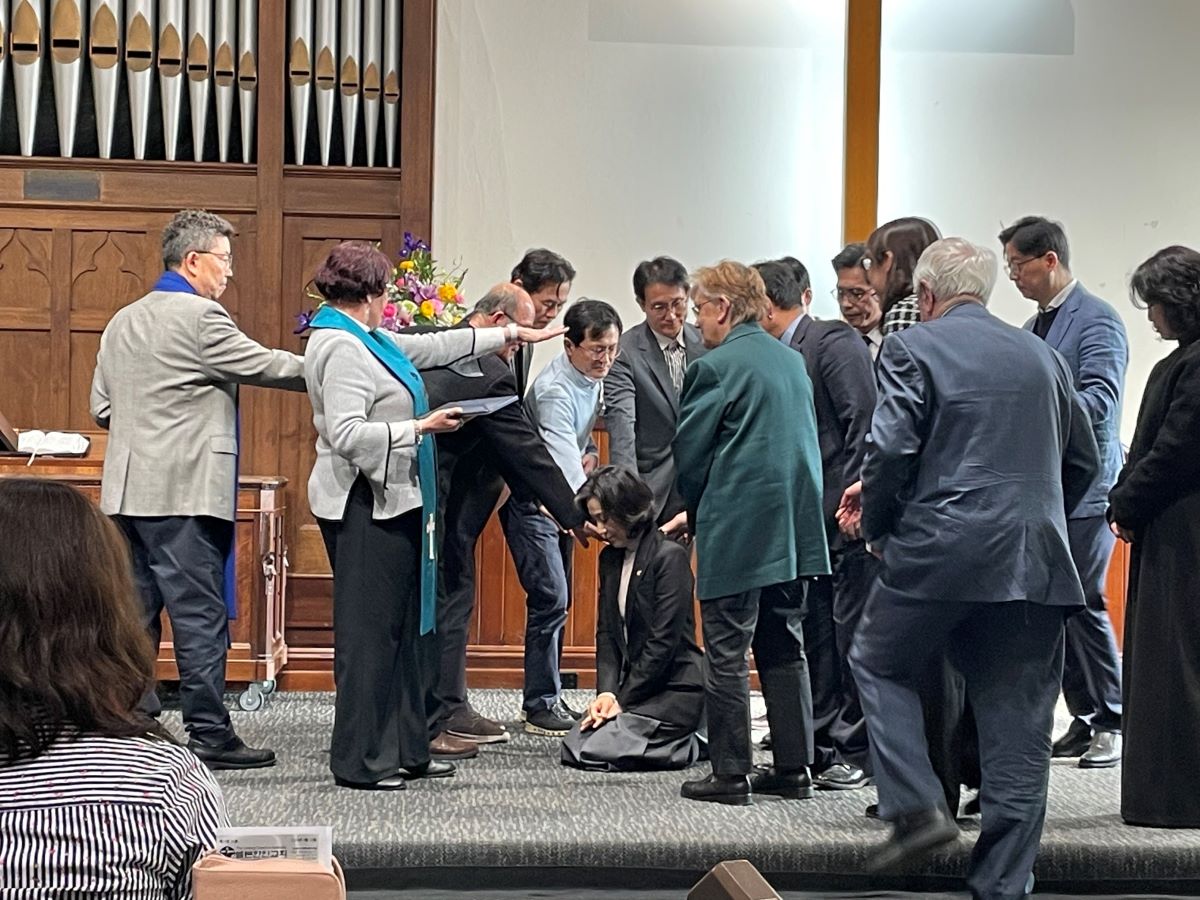
The laying of hands confirmed Silvia’s commissioning as a lay preacher.
As she walked and prayed, she became convinced preaching was that ministry. On the same day, Korean Church of Melbourne minister Rev Han Song sent a text asking if she would preach to the Sunday School the following January.
“For the first time, there was no hesitation,” she says. “I simply replied, ‘Yes’.”
Becoming a lay preacher still required formation in worship, preaching, the Uniting Church and the Code of Ethics for Lay Preachers. Having spent most of her Christian life in Korean-speaking congregations, Silvia says learning Uniting Church worship traditions was a challenge.
Her preaching also draws on more than three decades as an educator and 14 years working in broadcasting in Korea. She now teaches Spanish language and Latin American Studies at the University of Melbourne.
“Teaching focuses on understanding and knowledge, while preaching involves prayerfully listening to God’s Word and proclaiming it in a way that invites people to encounter God in their own lives,” she says.
Her experience of migration and living between cultures also informs that ministry.
Born in South Korea, Silvia moved with her family to Paraguay in 1975, aged 12, before returning to Korea for university. Her elder sister had settled in Melbourne and joined the Korean Church of Melbourne in 1979.
While living in Korea, Silvia became concerned about the intense competition surrounding secondary education. In 2001, she sent her eldest daughter to school in Melbourne; her younger daughter followed two years later. Silvia later joined them and made Melbourne home, while her husband continues to live in Korea.
Crossing countries, languages and denominations has also influenced how she communicates.
“You cannot simply speak; you must learn to listen, adapt and build bridges,” she says.
Silvia wants her preaching to be accessible across cultures and generations. She is particularly conscious of second and third-generation Korean Australians, and believes Korean churches need to consider how inherited cultural traditions can adapt if younger generations are to remain engaged.
A turning point in her wider church involvement came when she attended a Uniting Church women’s conference in Adelaide and worshipped alongside women from many cultural and linguistic backgrounds.
“For most of my Christian life, my faith community was almost entirely Korean,” she says.
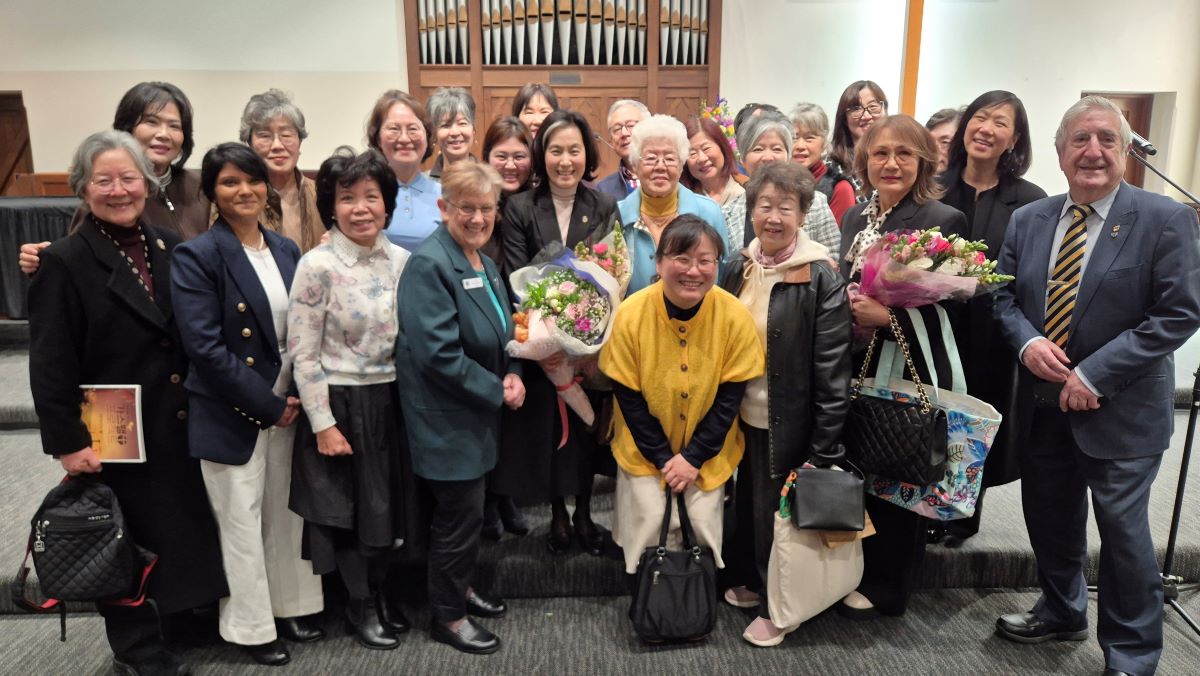
“This commissioning is not an ending but a beginning,” Silvia says. “My journey from teaching to preaching has only just begun.”
The experience expanded her sense of the “wider church” and prompted her to create similar opportunities for Korean women. In 2016, Silvia organised the Uniting Korean Women’s Forum.
In 2018, she also led a Contextual Learning for the Next Gen program to South Korea, focused on mutual relationships, respect and learning about different ministry contexts.
A decade later, she says four women who attended the 2016 forum have become ministers – three in the Uniting Church and one in the Baptist tradition.
Silvia now wants to explore how Korean cultural traditions and the Gospel interact, particularly for women and younger generations. For her, the commissioning is about more than one new role: it can also open conversations about who is called to preach, who participates in decision-making and how a Korean diaspora church can honour its traditions while adapting for the future.
The impact was apparent almost immediately after the commissioning service.
A woman in her 30s who had only recently joined the congregation messaged Silvia to say she had arrived unaware a commissioning was taking place but left feeling as though she had received “a gift” herself.
What moved her, Silvia says, was not simply the commissioning but the story behind it – 35 years as an educator and almost 20 years preparing for ministry.
The message helped Silvia see that the significance of the day might extend beyond becoming a lay preacher.
“God does not waste any part of our lives,” she says.
“We do not always see the whole picture. We simply take the next faithful step and trust God with the rest.”