
What does it really mean to belong? On Thursday, March 5, Year 10-12 students came together to discuss that question in ways that mattered.
Students from Billanook College, Penleigh and Essendon Grammar School (PEGS), St. Leondard’s College, Aitken College, Kingswood College, Beaconhills College and Braemar gathered for the leadership conference ‘Beyond Equal: Designing a Space Where Everyone Belongs’.
This event is part of a series of leadership conferences run by the Synod of Victoria and Tasmania for the schools across the UCA network. The day focused on three of the UCA’s characteristics: Celebrating equality and value of all people, listening and collaborative decision-making, and embracing diversity of faiths, cultures and languages.
Setting the stage
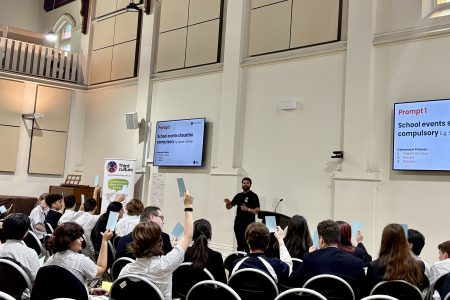
The event opened with Adrian Pyle, Director of Chaplaincy and Connections with the Synod of Victoria and Tasmania, who invited students to honour the space they were entering, an auditorium called Yuma, meaning “sharing”. From this first moment, the intention was clear: this was not a day for passive listening; it was a day to interact and learn.
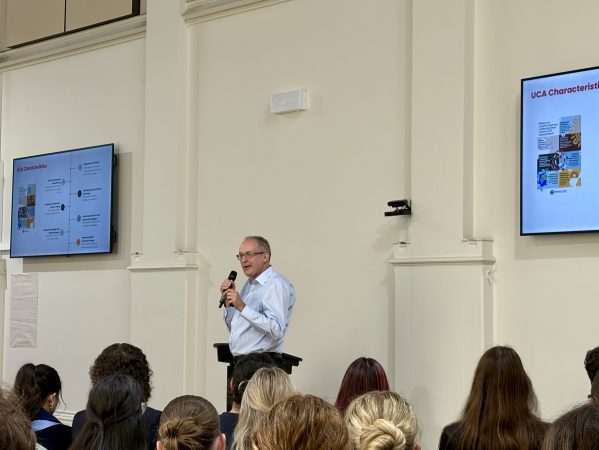
Adrian Pyle, Director of Chaplaincy and Connections, speaks at the event.
Celebrating equality and value of all people
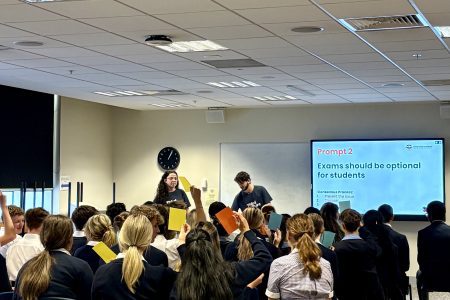
Kano from Third Culture Australia started with an interactive workshop where he unpacked topics such as unconscious bias, privilege, equity and what really is the meaning of belonging.
Abeer Fatima, a youth advocate, delivered a keynote that shifted the room. Abeer spoke about what it means to be a CALD member, young, to feel unheard and sometimes subject to unconscious bias and to decide to take control of her own narrative and seize every opportunity to share her story. Her message resonated with all students: your story is worth telling and telling it can open doors for others.
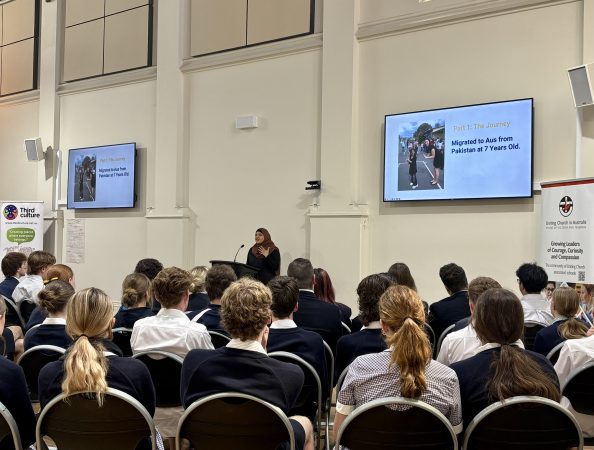
Abeer Fatima speaks at the leadership conference.
Listening and equitable decision-making
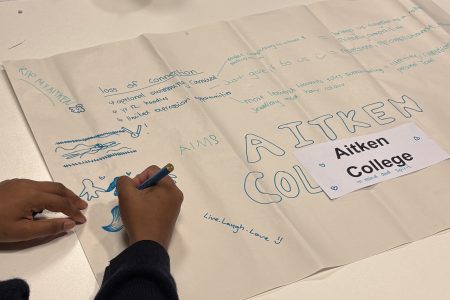
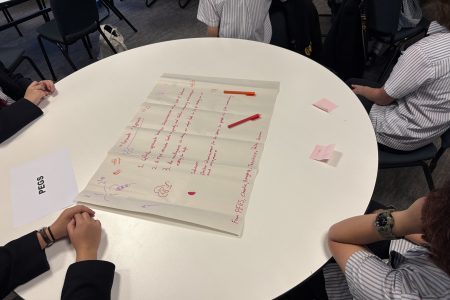
One of the most memorable sessions of the day was a deep dive into consensus-based decision-making, inspired by Uniting Church meeting guidelines. Students worked through a consensus process to find decisions that everyone can genuinely live with, not just majority-wins outcomes, but agreements where every voice has been heard and concerns addressed. It was a powerful activity in which students were given the opportunity to listen with care and empathy and look for a decision that includes all those perspectives.
Jacob Miller, social entrepreneur, followed the session with a keynote that closed the loop between values and action. Jacob shared his journey from school to owning his op-shop, a space where anyone can walk in and feel welcome. His story was a living example of what the day had been building toward: that belonging isn’t an abstract ideal. It’s something you design, decision by decision, every day.
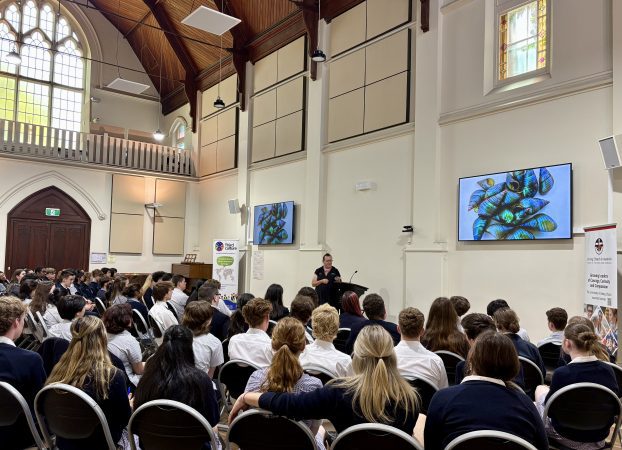
Jacob Miller speaks at the leadership conference.
Key outcomes
Over 75 per cent of students mentioned feeling satisfied with their experience, highlighting the new learnings and connections formed as standout takeaways. In their own words:
- “One of my best and memorable excursions ever. — PEGS student
- “I loved hearing the guest speakers’ stories and being allowed to express my thoughts.”— St Leonard’s College student
- “I enjoyed the school challenge because you got to use all the new knowledge practically. I also really liked the guest speakers.” — Beaconhills College student
- “My favourite part of the day was meeting new friends and developing new skills.” — Aitken College student
By the end of the day, these young leaders carried with them: a sharper eye for unconscious bias, a new toolkit for listening, and the conviction that inclusive spaces don’t happen by accident.