

By Andrew Humphries
At an age when many people might be considering a well-earned retirement, Rev Deacon Sandy Boyce shows no sign of slowing down.
She may have recently relinquished her role as president of the DIAKONIA World Federation, an organisation promoting the work of deacons at a global level, but there is still plenty to keep Sandy busy, and she doesn’t expect that to change any time soon.
As Co-convenor in the Network of Deacons within the Uniting Church, Executive Officer of the Victorian Council of Churches (VCC) and Chairperson of the Faith Communities Council of Victoria, Sandy continues to provide important leadership and advocacy.
What motivates her is social justice, and the belief that individual acts can go a long way towards making the world a better place.
“It’s having a Bible in one hand and a newspaper in the other,” she says.
In other words, it’s the need to tackle injustice wherever, and whenever, it rears its head.
It’s a commitment that began in the early 1970s, after Sandy became part of a Christian fellowship group at Adelaide’s Flinders University.
It was a time, she says, of political and social unrest around issues such as the Vietnam War and apartheid in South Africa, and Christian university students were leading the charge towards social justice.
For someone not brought up in a religious family, these were deeply formative years in Sandy’s faith journey, as she was drawn to the Methodist Church and then, after its formation in 1977, the Uniting Church.
“Both the Methodist and Uniting churches were heavily engaged in social justice during those early years, and there were some key leaders in both who were doing some very important and pioneering, work,” she says.
“It was work that was really well grounded in good theology and that was definitely the right fit for me.”
After graduating from university, Sandy embarked on a 20-year teaching career before her congregational minister encouraged her to pursue youth work within the Uniting Church in South Australia in the early 1990s.
It was a move towards missional work, though, that was to have the most profound impact on her.
As People in Mission Co-ordinator with Uniting International Mission, the forerunner to UnitingWorld, she witnessed first-hand in the Philippines the importance of theology grounded in social justice.
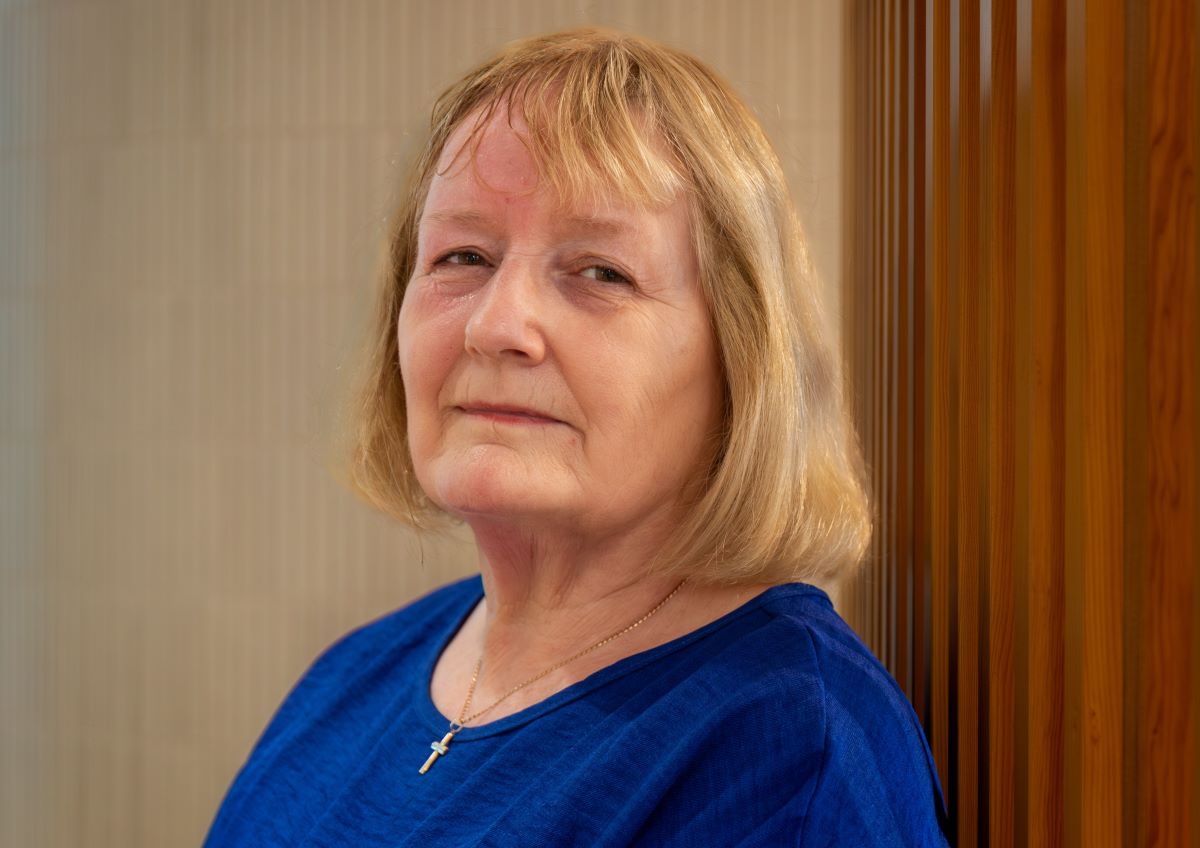
Sandy hopes to provide a mentoring role for the next generation committed to social justice.
“It’s a country which is not poor but, because of corruption, the people are poor and there is much injustice,” she says.
“For me, it was an amazing experience as I encountered a theology founded around social justice and I thought ‘wow, where have I seen anything like this before?’.”
A trip to India, and contact with its outcast Dalit people and their liberation theology, further cemented social justice as a passion for Sandy.
“Encountering this level of injustice in the Philippines, India and other places was an incredible learning experience and it really changed how I began to read the Bible,” she says.
“We tame the Bible to make it feel like something comfortable for us, but when you read it through the lens of an underprivileged people you end up reading it very differently, and this was particularly transformative for me.”
It was this passion for social justice that led Sandy towards diaconal ministry, rather than a placement as a Minister of the Word.
While Ministers of the Word primarily focus on the ‘gathered church community’, Deacons’ primary focus is the ‘scattered community’ beyond the church building.
“Deacons are often charged with the prophetic task of speaking up for the marginalised and building bridges between the Church and other communities,” Sandy says.
“Even when Deacons are in a congregational setting, they will retain the focus on connecting the Church and the ’dispersed community’.”
In 2006 Sandy was ordained as a Deacon, serving as minister at Pilgrim Uniting Church in Adelaide for 12 years.
As her role as a Deacon progressed at a local and national level, the opportunity presented itself to have an impact at a global level through the DIAKONIA World Federation.
From relatively humble beginnings as co-editor of the federation’s annual newsletter, Sandy’s communications expertise led to her being invited to join its Executive Committee.
“I was then asked to consider the role of President, which I accepted, taking on the role at the DIAKONIA World Assembly in Berlin in 2013,” she says.
“I was privileged to serve three terms in the role.”
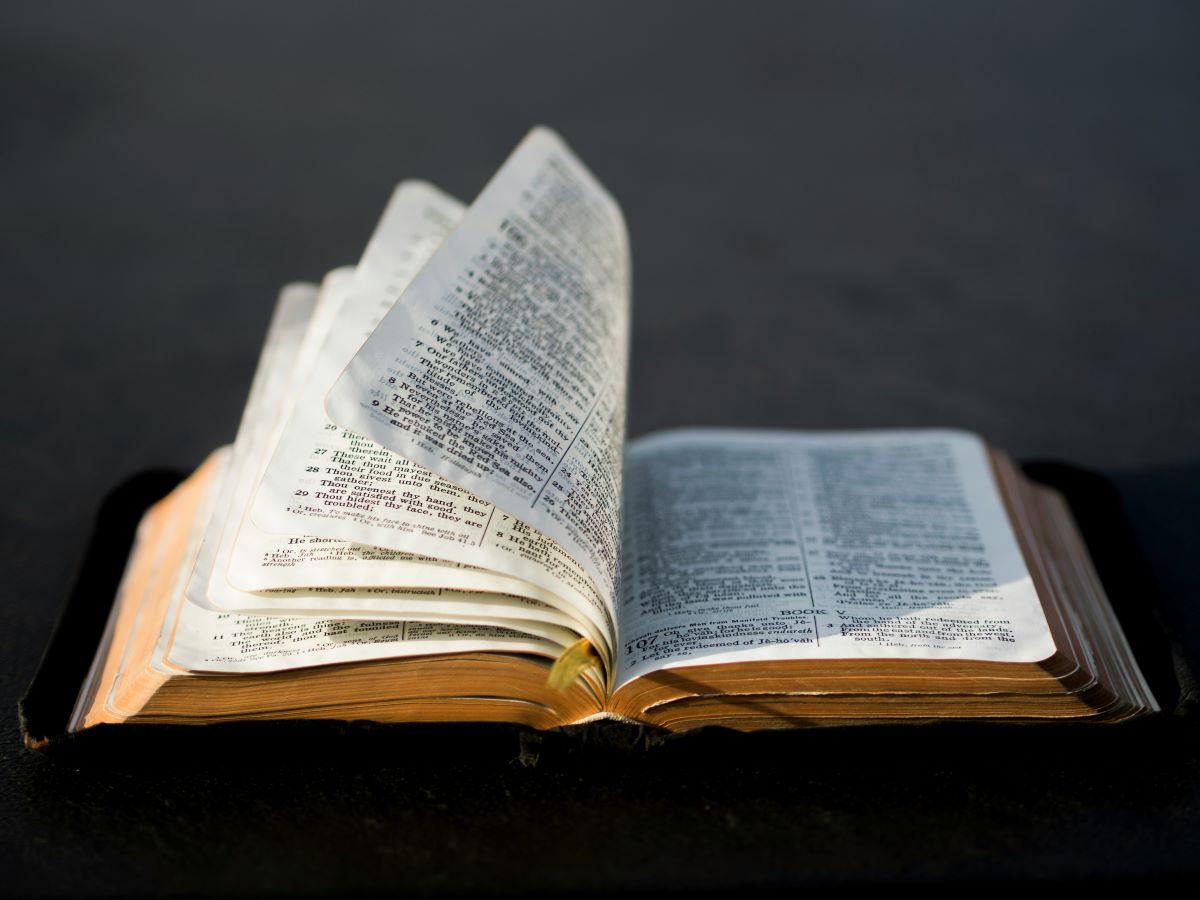
With a Bible in one hand and newspaper in the other, Sandy Boyce tackles injustice wherever she sees it.
Sandy stepped down as President in July last year at the DIAKONIA World Assembly in Moshi, Tanzania, after 12 fulfilling years spent promoting the centrality of diaconal ministry in and beyond the church, and encouraging strong connections among diaconal ministry agents at a global level.
“While member associations have their own particular responsibilities to manage, they also recognise that there is much to be gained through connecting with each other and raising the profile of diaconal ministry,” she says.
“To be able to connect with this wider group of deacons for encouragement, resourcing and exchanging of ideas is vitally important.
“Member associations of the DIAKONIA World Federation value that opportunity to develop strong connections with each other around education and raising the profile of diaconal ministry, and the opportunity to be able to continue and maintain those connections is very important.”
While she has stepped down as President, Sandy continues to be involved with the federation, stressing its ongoing importance in spreading a message of service, justice and compassion in an often fractured world.
At a more local level, her work with the VCC remains just as important at a time, she admits, when many churches are finding it harder to maintain an ecumenical focus as many other things vie for peoples’ attention.
While there is a sense that churches have become more marginalised in recent years, Sandy believes the VCC still has a powerful role to play as a voice for good in the community.
“I would hope that the VCC recognises the strength of its combined voices in all sorts of ways,” she says.
“The issues that we do stand as one on mean we can speak about them, using that combined voice.
“However, our church leaders certainly recognise that there has been some sidelining of them and less listening to their voices, but that gives us all the more reason to ensure those voices are still speaking and being heard.
“The truth is that our combined voices still represent a significant part of the population.”
Sandy intends to continue being a passionate voice for social justice and likes the idea of becoming a mentor to the next generation committed to seeing change for good in the world.
“It’s an ongoing process of discernment for me, but I can’t imagine my world moving away from a focus on issues around social justice,” she says.
“It’s still about having that Bible in one hand and a newspaper in the other.”